ServicesWhole-house carbon filtration
Whole-House Carbon Filtration in Arlington
We install carbon filtration on your main water line so the kitchen, the showers and the laundry all run without that pool-water smell. Each system is sized to your home, fitted with a pre-filter that protects the carbon, and set up with a service plan from day one.
What a whole-house carbon system does
City water is disinfected so it stays safe on its way to you. That treatment is doing its job, but it leaves a taste and odor many people notice most in a hot shower or a glass of tap water. Activated carbon holds onto those compounds as water passes through it, so what reaches your fixtures tastes and smells cleaner.
A whole-house unit sits where water enters your home, usually near the main shutoff, and treats everything downstream. It is the right call when the smell bothers you at every tap, not just the kitchen. If your main concern is drinking water alone, under-sink reverse osmosis may be the better fit, and we will say so.
We think of the system as something you will live with for many years. That shapes how we size the tank, which carbon we choose and how we plan the first media change before we ever leave your driveway.
What the installation includes
Sizing to your water use
We look at bathroom count, people in the home and peak flow. An undersized tank drops pressure when two showers run and wears out its carbon early.
The right carbon for your water
Standard carbon handles chlorine well. Where the utility uses chloramine, we recommend catalytic carbon, which is made to break down that compound more effectively.
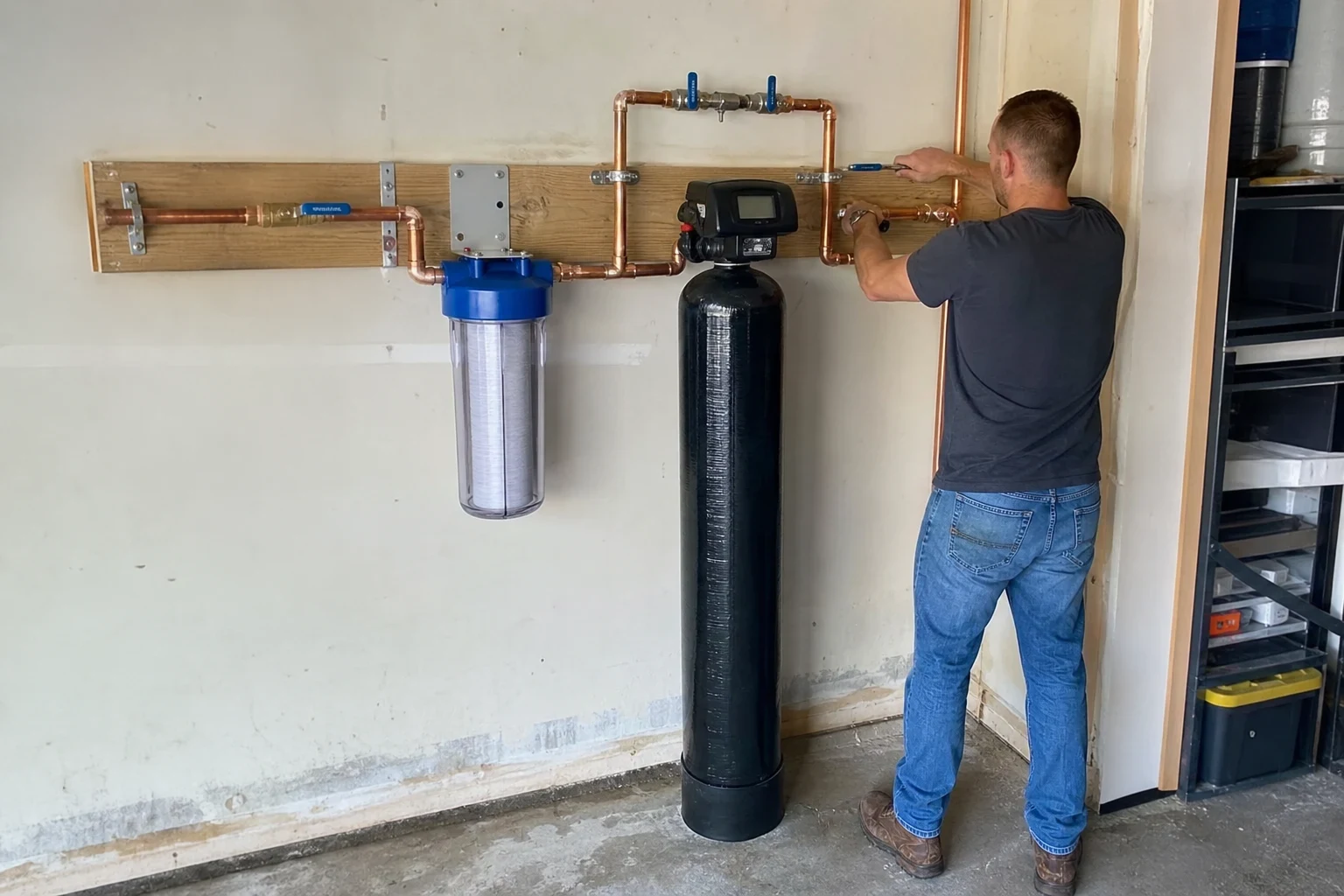
Sediment pre-filter
A cartridge ahead of the tank catches grit and scale flakes before they coat the carbon. Changing that inexpensive cartridge is what lets the carbon itself last.
Bypass valve and clean plumbing
We fit a bypass loop so the system can be serviced without shutting off water to your home. Joints are made neatly, supported properly and checked for leaks under full pressure.
A written service schedule
You get a simple record of what was installed, the cartridge size and when the pre-filter and carbon are due. Our filter replacement and maintenance visits follow that same schedule.
Signs your home could use carbon filtration
A chlorine smell in the shower
Hot water releases disinfectant into the air, so the bathroom is often where people notice it first.
Tap water you avoid drinking
If the family reaches for bottled water because of taste, a carbon system usually changes that at every faucet.
Dry skin or hair after bathing
Many people find showering on filtered water more comfortable. Results vary, so we treat this as a likely benefit rather than a promise.
A pitcher filter that cannot keep up
Small filters help one glass at a time. When you are refilling constantly or still smell it in cooking water, treating the whole line makes more sense.
An older system that has gone quiet
Carbon that has never been changed stops working long before the tank looks worn. If yours is past due, a media change may be all it needs.
How the job unfolds
- 1
A call, then a look at your water
It begins on the phone, and we confirm the details at your house. If lead, iron or hardness is on your mind, we suggest water testing first so the system fits what your water actually holds.
- 2
Picking the spot
Many local homes have the main line entering near the garage. We choose a place with room to service it and keep the tank out of direct sun, because summer heat wears on housings.
- 3
The install
The water goes off briefly while we connect the bypass, pre-filter and tank. Floors get covered, the new carbon is flushed until it runs clear, and we clean the work area.
- 4
Walkthrough and first service date
We point out the bypass and the pre-filter housing and explain how to tell a change is due. Then we put the first service date on your schedule.
What moves the price
We give you a written, line-item estimate before any work begins. The total depends mostly on how much water your home uses and how easy the main line is to reach. We will also tell you plainly what ongoing upkeep will cost, since that is part of owning the system.
- Tank size
- Larger homes with more bathrooms need more carbon to keep flow strong and media life reasonable.
- Type of carbon
- Catalytic carbon costs more than standard carbon, and it is only worth it when your water calls for it.
- Access and plumbing changes
- A main line in an open garage is simple. Tight spaces, rerouting pipe or adding a new outdoor hose bib bypass take more time and material.
- Pre-filtration needs
- Most homes need only a sediment cartridge. If testing shows iron, an iron and sediment filtration stage ahead of the carbon adds to the cost but protects it.
Whole-house carbon filtration questions
Something not covered here? (817) 799-6636
When does the carbon need replacing?
That depends on the tank size and your household's water use. A well-sized system often runs several years between carbon changes, while the sediment pre-filter is replaced more often. We set both dates at install so neither slips.
Does a whole-house filter reduce water pressure?
A properly sized system shouldn't cause a drop you notice. Lost pressure usually traces to a tank that is too small or a clogged pre-filter, so we size with care and keep the cartridge on schedule.
Will carbon filtration take out lead?
A whole-house carbon tank targets taste and odor, not lead. If you are worried about older plumbing, we suggest water testing and, when it fits, under-sink reverse osmosis for drinking and cooking water.
Does it soften the water?
No. Carbon leaves hardness minerals in place. If scale is showing up, we would test hardness first and recommend a water softener only if the results back it.
Will you work on a system another company put in?
In most cases, yes. We inspect the tank, valve and media, then tell you straight whether new carbon will revive it or whether replacing it is the smarter spend.
Ready for better water at every tap
Tell us about your home and what you are noticing in the water. We will talk through sizing, carbon type and upkeep so you know what to expect before we schedule a visit.