ServicesFilter maintenance
Filter Replacement and Maintenance in Arlington
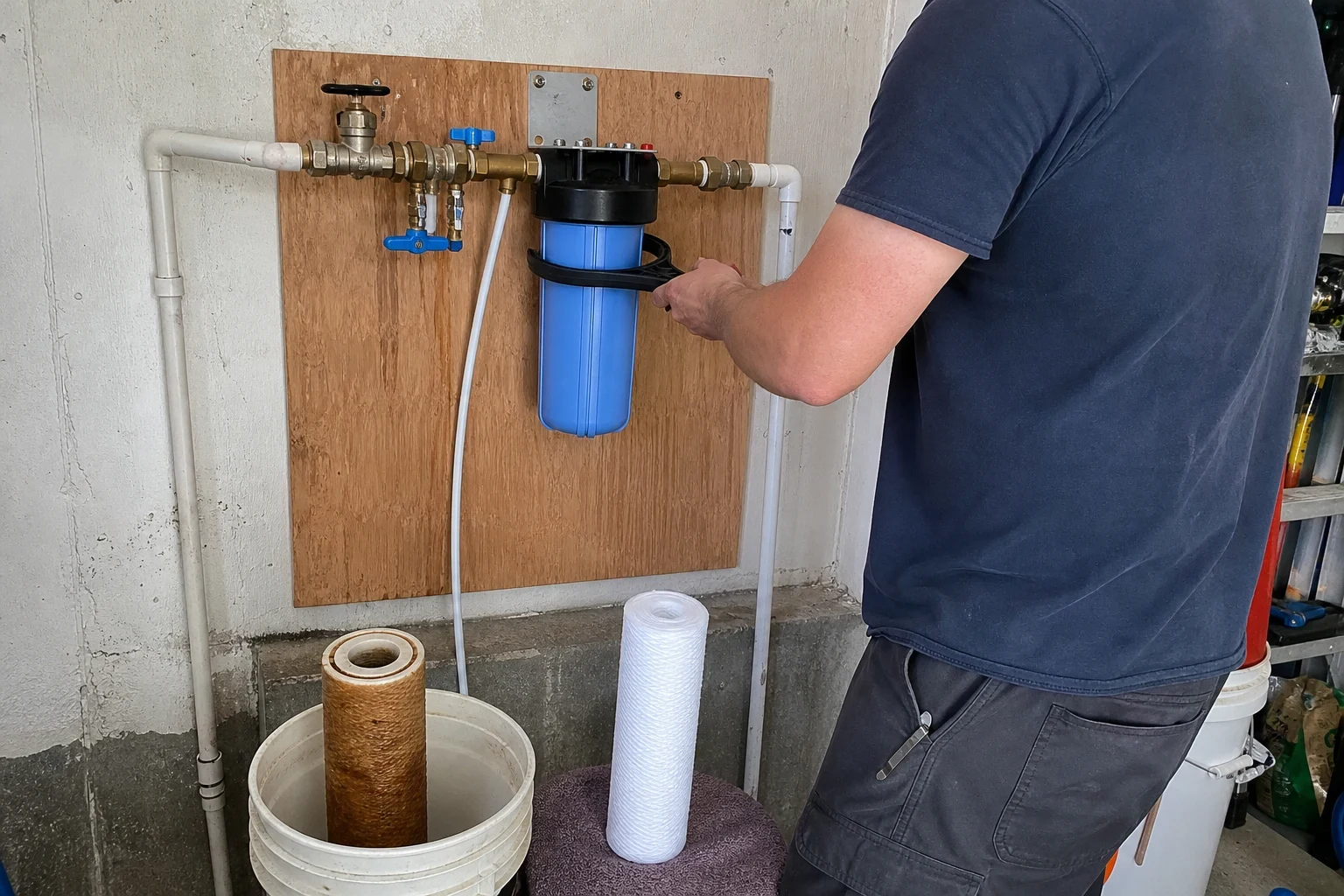
Every filter in your home has a working life. We replace cartridges, carbon media, sediment stages and reverse osmosis membranes before they load up, then check the housings, O-rings and valves around them so the system you already own keeps doing its job for years.
Upkeep that protects the system you already paid for
A filtration system rarely fails all at once. Sediment cartridges clog slowly and pressure drops a little each month. Carbon reaches its capacity and the chlorine taste creeps back. An RO membrane fouls and the tank takes longer to fill. By the time you notice, the filter has often been passing water it should have caught for weeks.
Our filter replacement and maintenance visits are built to stay ahead of that. We service equipment we installed and most systems we didn't, from a single under-sink unit to a whole-house carbon tank in the garage. Hot North Texas summers are hard on housings and seals in garages and exterior closets, so we look at the parts around the filter, not just the filter itself.
If a part is worn, we show you and explain whether it can wait. If the system is near the end of its life, we tell you plainly and you decide what happens next.
What a maintenance visit covers
- 01
Cartridge and media replacement
We swap sediment, carbon and specialty cartridges with the correct micron rating and size for your housings. For backwashing tanks, we check the media and tell you when a rebed makes more sense than a new tank.
- 02
Reverse osmosis service
Prefilters, postfilter and membrane are changed on their own schedules, not all at once out of habit. We check tank air pressure with a gauge and test output with a TDS meter so you can see the membrane is still doing its work.
- 03
Housings, O-rings and fittings
We clean each housing, inspect the O-rings for flattening or cracking and lubricate them with food-grade silicone. Small leaks at fittings and bypass valves get tightened or replaced while we are there.
- 04
Pressure and flow check
Gauges before and after the system show whether a pressure drop comes from the filter or from somewhere else in your plumbing.
- 05
Sanitizing where it's needed
When the system calls for it, we sanitize housings and RO lines during the change so the new filters start clean.
- 06
A written service record
You get a note of what was changed, the date and what to expect next. The next visit is planned instead of remembered late.
Questions about Filter maintenance?
Call(817) 799-6636Signs your filters are overdue
Lower water pressure
A weak shower or a faucet that sputters often points to a loaded sediment or carbon cartridge. It is the most common reason people reach us.
The chlorine taste is back
When carbon is spent, the disinfectant taste and smell of city water return. The change is gradual, so it can take a while to notice.
A slow drinking water tap
If the RO faucet dribbles or the tank runs dry quickly, the prefilters may be clogged or the tank may have lost its air charge.
Discolored cartridges
A brown or orange cartridge after a few months suggests sediment or iron. If it happens fast, water testing can tell us why.
No one remembers the last change
Plenty of systems run years past their schedule. If the date on the housing is a guess, it is time.
How the visit runs
- 1
A short call first
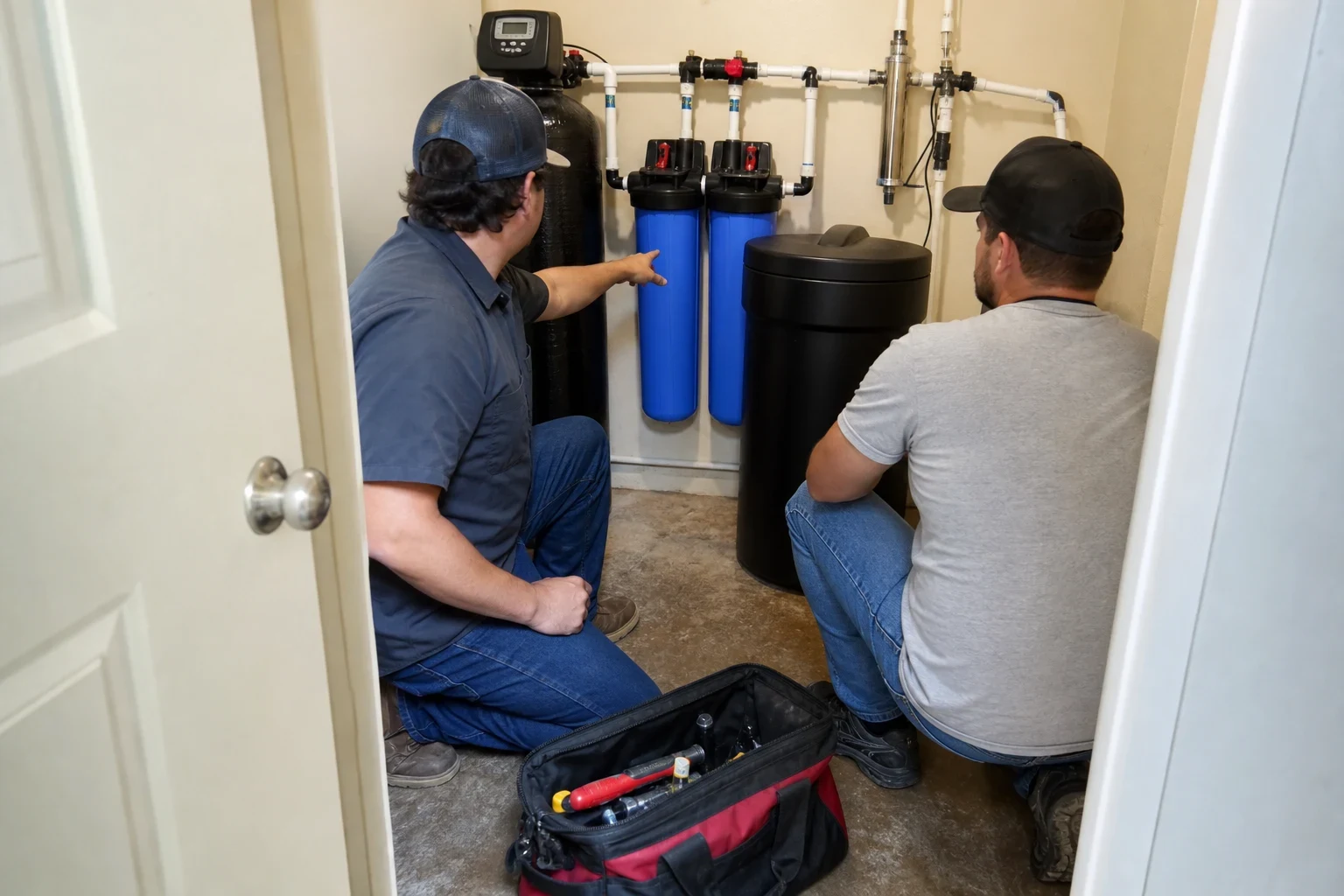
Tell us what system you have and, if you know it, the brand and model from the label. We bring the right cartridges and membranes so the work is done in one visit.
- 2
Inspect before we open anything
We record pressure, look for drips and check the bypass. Then we shut off water to the system and relieve the pressure.
- 3
Replace and service
Old filters come out, housings are cleaned, seals are inspected and new filters go in. Floors and cabinet bases are protected with towels or a mat.
- 4
Flush and confirm
We flush new carbon and membranes to clear fine particles, restore water and check for leaks. Pressure is retested, and on RO systems we retest TDS. The old cartridges leave with us.
- 5
Plan the next one
We suggest an interval based on your water use and what the old filters looked like, not a one-size calendar.
What sets the price of a maintenance visit
The filters make up most of the bill, so the price tracks the system you have. After we learn your equipment, we quote you by phone and explain any added part before installing it. Systems differ too widely for us to post fair numbers here.
- System type and stage count
- Servicing one whole-house cartridge costs less than a five-stage RO unit that is due for a new membrane.
- Cartridge brand and format
- Proprietary cartridges tend to cost more than standard sizes. We can check whether a compatible standard filter fits your housing.
- State of the seals and housings
- A cracked housing, tired O-rings or a failing bypass valve means more parts and more time.
- How easy it is to reach
- Units in a cramped sink cabinet or tight utility closet take longer than those on an open garage wall.
- How long it has been
- Heavily fouled systems can need more flushing or sanitizing, and at times new media rather than a quick change.
Questions about filter upkeep
How frequently do my filters need changing?
That varies with the filter and your household's water use. Sediment prefilters often last a few months, carbon cartridges and RO prefilters about six to twelve months, and RO membranes a few years. We check what comes out of each housing and set the interval to how you really use water.
Will you service a system installed by someone else?
Usually, yes. When you call, read us the label on the unit or housing so we arrive with the right parts. If a cartridge is no longer made, we let you know ahead of time and suggest a standard one that fits.
Couldn't I swap the cartridges on my own?
Lots of homeowners do, and we are happy to show you how. What a visit adds is the checking around the change: seals, pressure, tank air charge and membrane output. Some people handle simple cartridges and book us once a year.
Do I lose water during the visit?
Only at the filtration system, and typically just briefly. Most whole-house setups have a bypass, so the rest of the house still has water while we work.
What happens if my system is worn out?
We say so directly and show you the reason. Often a new housing or valve is enough. If replacing it is the better move, we can go over whole-house carbon filtration or under-sink reverse osmosis, and you make the call.
Keep your filters doing their job
Let us know which system you own and about when it was last serviced. We will quote you by phone and book a visit that fits your schedule, in Arlington and nearby towns such as Mansfield and Grand Prairie.