ServicesWater softeners
Arlington Water Softeners, Installed Only After a Hardness Test
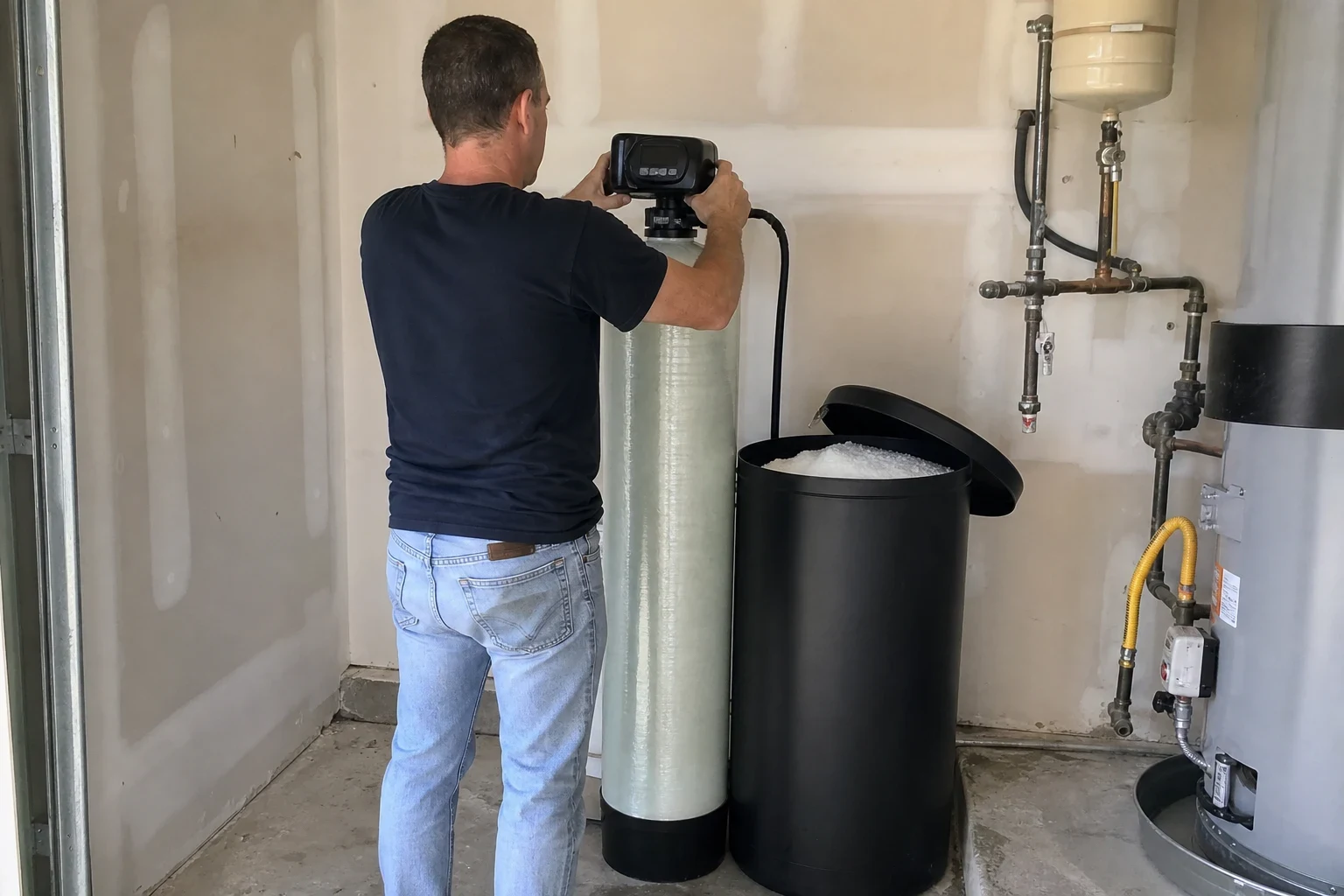
A softener goes in only if an in-home hardness test shows it will make a difference. When it will, we size it to your water and household, install it carefully and show you the easy upkeep that keeps it running well for years.
A softener should answer a measured problem
Hard water carries dissolved calcium and magnesium. Over time those minerals leave a white crust on faucets and shower glass, build scale inside your water heater, and wear down fixtures and appliances sooner than they should. A softener exchanges those minerals through a bed of resin beads, then rinses the resin with brine so it can keep doing the job.
We do not sell one on assumption. Water can differ from one house to the next, and the right answer for your neighbor may not be yours. So we test at your tap and explain plainly what the reading means. Sometimes the honest answer is a softener. Sometimes it is iron and sediment filtration, whole-house carbon filtration, or nothing at all.
When a softener does make sense, we treat it as long-term equipment. Its purpose is to protect what you already own, and it should be easy to look after.
What our softener service includes
- In-home hardness test
- We measure hardness at your tap before anything else is discussed. You see the result and what it means for your plumbing and fixtures.
- Sizing to your water and usage
- Capacity is matched to your hardness reading, the number of people in your home and how much water you use. An oversized unit wastes salt and water, while an undersized one regenerates so often that the valve and resin wear early.
- Careful installation at the main line
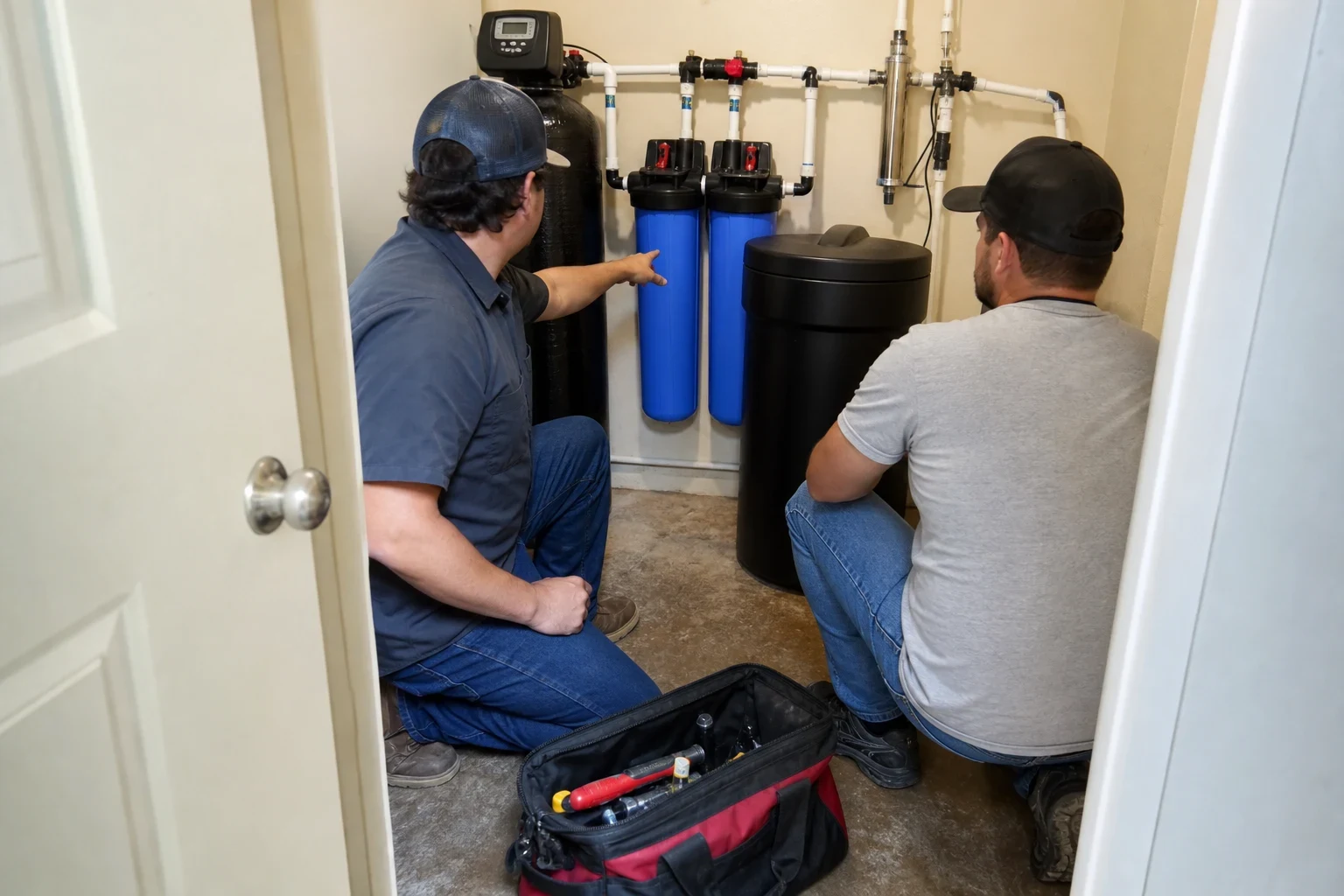
- We fit a bypass valve so water can be routed around the softener for service, run the drain line with a proper air gap, and protect floors and finished surfaces while we work. Cleanup is part of the job.
- Settings that fit your home
- We program the hardness setting and a demand-based regeneration schedule, so the unit cleans its resin when your usage calls for it rather than on a fixed timer.
- A walkthrough of upkeep
- Before we leave, we show you which salt to use, how full to keep the brine tank and how to spot a salt bridge. It takes a few minutes and saves real trouble later.
- Ongoing care when you want it
- We can return to clean the brine tank, check the resin and inspect the valve. Many owners pair this with our filter replacement and maintenance visits.
Clues that a hardness test makes sense
Buildup on faucets and showerheads
Chalky white deposits around aerators and spray holes are mineral scale. If they come back shortly after cleaning, hardness is a probable cause.
Spotted glasses and shower doors
A cloudy film that won't rinse off is often minerals left behind when water dries.
Soap won't lather well
Hard water reacts with soap, so you go through more and still feel residue on skin and hair.
Popping or rumbling from the water heater
These noises can mean scale has collected at the bottom of the tank. That buildup forces the heater to work harder and can cut its life short.
A softener that seems to do nothing
If salt never goes down, or disappears much faster than expected, the unit may be misset or need service. Testing tells us whether to repair, adjust or replace it.
What shapes the cost of a softener
Every softener estimate starts with your test result, because hardness sets the size of the unit. From there, the price depends on the equipment and on what your plumbing needs to receive it. We list each part separately so nothing comes as a surprise.
Capacity and control valve
Harder water and larger households call for more resin capacity. Demand-based valves cost more than simple timers but use less salt and water over time.
Location and plumbing access
A home with a pre-plumbed softener loop is straightforward. If we need to cut into the main line, add a bypass or route a drain a long distance, the labor grows.
Pre-filtration needs
Iron or heavy sediment fouls softener resin. If your test shows either, adding a pre-filter protects the softener and extends its life.
Removing an older unit
Replacing a worn softener includes disconnecting and hauling away the old tanks. Sometimes the old one only needs service, and we will tell you if that is the case.
How a softener job runs
- 1
Test and talk it through
We test your water's hardness in your home and walk you through the reading. If a softener is not the right fit, we tell you so and explain what would help instead.
- 2
Written estimate
If a softener makes sense, you get a written, line-item estimate covering the unit, installation and any plumbing changes, so you know what you are agreeing to before work begins.
- 3
Installation day
We lay down floor protection, shut off the water briefly, and fit the softener, bypass and drain line. Most of the day's disruption is the short window your water is off.
- 4
Settings and a first check
We program the unit, start a regeneration cycle and test the water again to confirm it is softening. Then we tidy up and leave the area as we found it.
- 5
Care over the years
We explain the salt routine and what to watch for. When it is time for a brine tank cleaning or valve check, a phone call is all it takes.
Softener questions we get
Does an Arlington home really need a softener?
It comes down to what flows from your tap, so we test first. Some homes gain little, and we will tell you that. With a low reading, a softener would add salt and upkeep while protecting very little.
Does soft water feel different?
It does. Many people notice a slippery feel on their skin after a shower. That is just the missing minerals that once reacted with soap, and most people adjust within a week or two.
How often does salt need adding?
It varies with your hardness and water use. A good routine is to check the brine tank monthly and keep salt above the water line without filling it to the top. We show you what that looks like during the install.
What is the lifespan of a softener?
With regular care, a softener can last many years. Clean salt, correct settings and a pre-filter where there is iron or sediment all extend the life of the resin and valve. Neglect, salt bridges and a dirty brine tank in particular, wears them out early.
Will you service my current softener?
Frequently, yes. We can test the water, clean the brine tank, check the resin and reset the valve. If the unit can't be saved, we explain why before raising replacement.
Does a softener make drinking water better?
A softener takes out hardness minerals, not chlorine taste or trace contaminants. For water you drink and cook with, under-sink reverse osmosis is the better choice, and it also strips out the small amount of sodium a softener adds.
Start with the numbers
A hardness test tells us whether a softener will protect your plumbing or simply add upkeep. We will share the reading and give you a straight answer either way.