ServicesWater testing
Arlington Water Testing
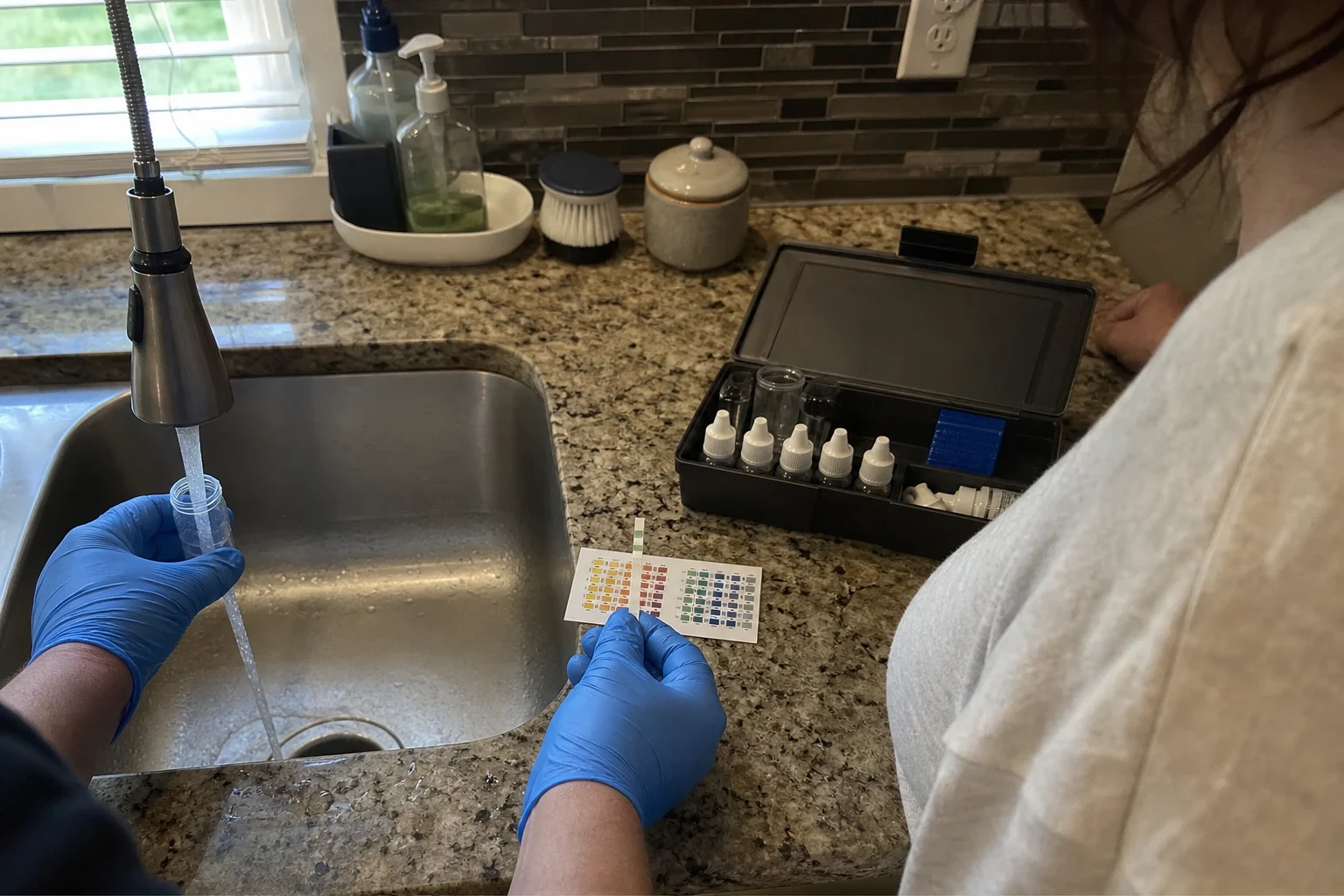
You should know what your water contains before anyone offers you a filter. We test right at your faucet, explain each reading in everyday terms and tell you straight whether you need treatment, just a filter change or nothing.
Start with the numbers, not a sales pitch
City water in Arlington is treated and monitored, and for most homes it meets drinking water standards when it leaves the plant. What changes is the last stretch: the pipes in your walls, the water heater, any filter that has been sitting past its service date. A test tells you what is coming out of your faucet today, not what a utility report says about the system as a whole.
We use testing as the foundation for everything else we do. A clear baseline keeps you from buying equipment you do not need, and it lets us size the right equipment correctly when you do. Retesting later shows whether a filter is still doing its job, which is how a system stays useful for years instead of quietly wearing out.
What a water test covers
- Hardness
- We measure calcium and magnesium in grains per gallon. This single number decides whether a softener makes sense in your home or would simply add upkeep without much benefit.
- Iron and sediment
- We check for dissolved iron and visible particles. Even small amounts can stain fixtures and shorten the life of cartridges and appliance valves.
- Chlorine and taste
- We read the disinfectant level at your tap. It is usually well within safe limits, but it is the most common reason people dislike the taste and smell of their water.
- Lead and plumbing concerns
- In older homes with original plumbing or soldered joints, we take a first-draw sample for lab analysis. Lead in tap water usually comes from household pipes and fixtures, not the city supply.
- pH and total dissolved solids
- These two readings show how your water is likely to treat pipes and fixtures over time, and how well a reverse osmosis system is performing if you already have one.
- A written summary
- You get your results on paper with each reading next to its common reference range, plus our recommendation in a few sentences.
Signs it is time to test your water
A taste or smell you have stopped ignoring
A pool-like smell, a metallic edge or a musty note in hot water each point to different causes. Testing tells us which one you are dealing with.
Spots, rings or stains
White crust on faucets suggests hardness. Orange or brown stains in toilets and tubs usually mean iron.
You live in an older home
If your plumbing has not been updated in decades, a lead test is a sensible, low-cost step, especially with young children in the house.
A filter you inherited
If you bought a home with equipment already installed, a test shows whether it is still working or has been coasting on an expired cartridge.
Someone recommended a softener
Get a hardness number first. Many homes do not need one, and a test settles the question before you spend anything.
What affects the cost of testing
Most of what we check can be read on site in a single visit. The price depends mainly on how many things we test for and whether any samples need to go to a lab. We tell you which tests we recommend and what they cost before we draw any water.
Number of parameters
A basic panel for hardness, iron, chlorine, pH and dissolved solids is the simplest visit. Adding specific concerns adds to it.
Lab analysis
Lead and some trace contaminants require an outside lab, which adds a lab fee and a few days of waiting.
Multiple sample points
Testing before and after an existing filter, or at more than one faucet, takes more time and materials but shows exactly where a problem starts.
Follow-up testing
A retest after new equipment is installed, or at a regular interval, is usually a shorter visit because the baseline is already on record.
How a testing visit runs
- 1
A short conversation
When you call, we ask what you have noticed and how old your plumbing is. That shapes which tests we run so you are not paying for ones that do not apply.
- 2
Sampling at your tap
We draw water from the kitchen faucet and, when it helps, from a bathroom or the line after any existing filter. Most readings take minutes and you can watch them happen.
- 3
Lab samples where needed
Lead and certain other checks need laboratory equipment. We collect those samples properly and send them to an independent lab, then follow up with you when the results return.
- 4
Results and an honest answer
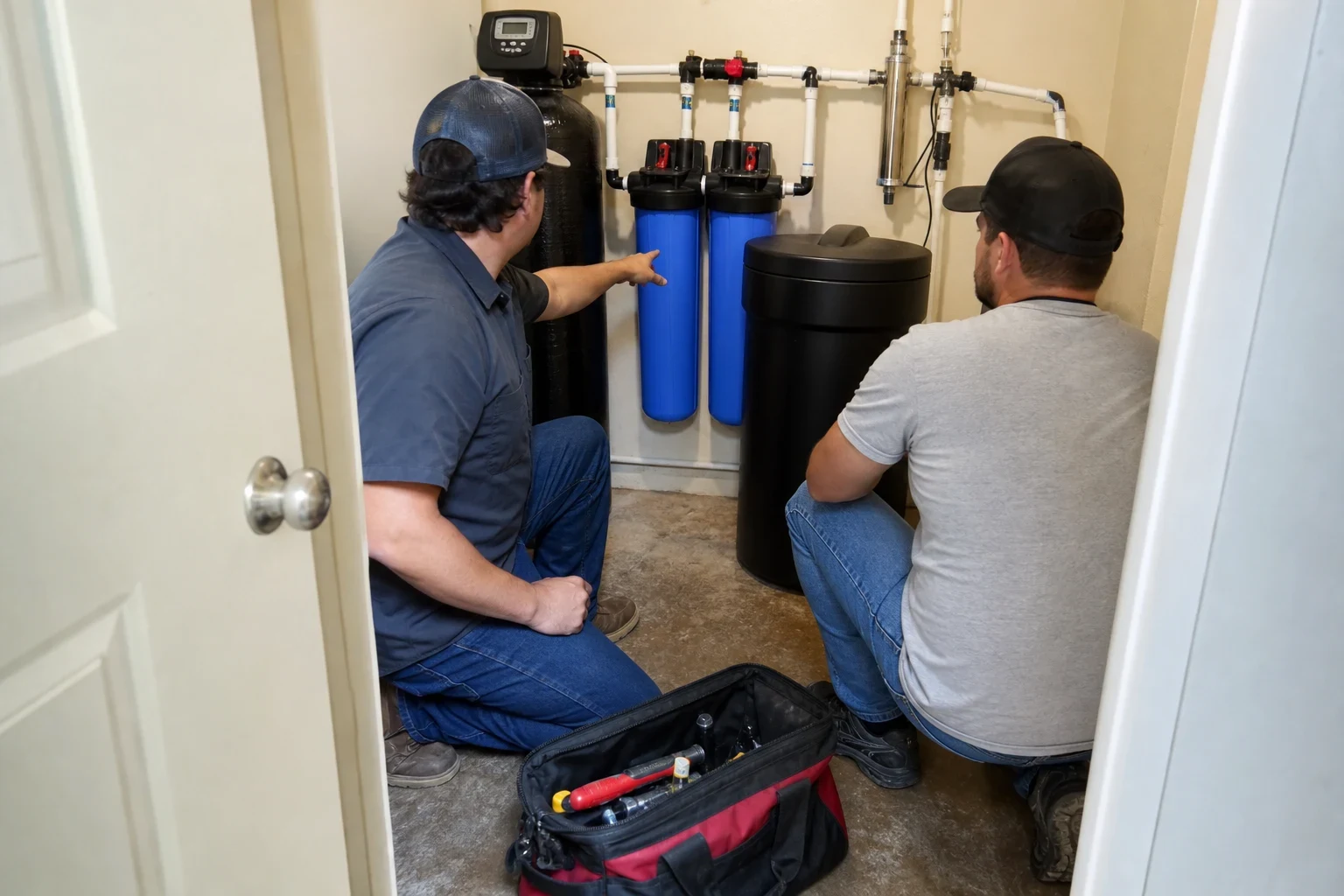
We walk through each number and tell you what, if anything, is worth doing. Sometimes that is whole-house carbon filtration or an under-sink reverse osmosis unit. Often it is simply changing an old cartridge or leaving things as they are.
Questions about testing
Can I safely drink Arlington tap water?
For most homes, yes. The city treats and monitors its supply, and it generally meets federal and state standards. What is worth testing is taste, minerals and what your own pipes add after water reaches your property.
Will the test turn into a sales pitch?
We tell you what the results support, including when you need nothing. Testing first keeps us from suggesting equipment that would only give you more to maintain.
Should an Arlington home have a softener?
That depends on your hardness reading. Some homes benefit, and many see too little change to justify the upkeep. We test, then give you a direct answer about water softeners.
When will I get results?
On-site readings are done during the visit. Lab samples such as lead usually return within several days, and we review them with you by phone when they come in.
How often is retesting a good idea?
Once after new treatment equipment goes in, to make sure it works. From then on, a periodic check during filter replacement and maintenance keeps your system on track and spots changes early.
Do you test outside Arlington?
We do. We also test in nearby towns such as Grand Prairie, Mansfield, Kennedale and Bedford. The Service Areas page shows everywhere we go.
Learn what your water actually holds
A single visit gets you clear numbers and a straight recommendation. Then you can decide on your own time, with no push to buy anything.