ServicesIron and sediment filtration
Arlington Iron and Sediment Filtration
Rust stains, gritty faucet screens and a rumbling water heater usually mean particles are moving through your pipes. We test before anything else, then install a sediment or iron filter sized for your home and set up so cartridge changes are easy. The aim is fixtures and appliances that last for years.
What these filters do and when you need one
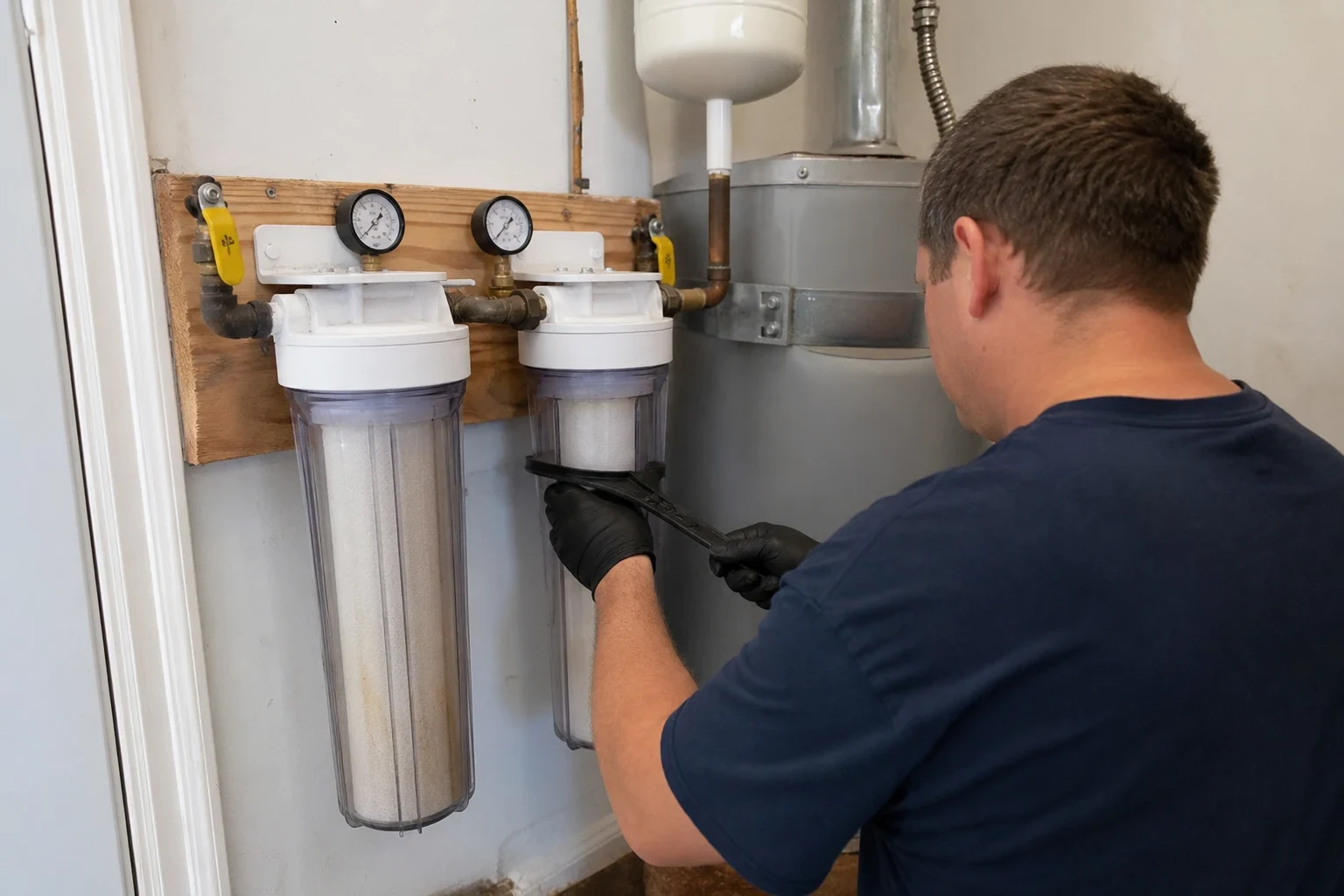
A sediment filter traps sand, rust flakes and pipe scale before they get to your faucets, shower valves and water heater. An iron filter does more: it oxidizes dissolved iron so it can be caught rather than staining tile and clothes. Both are installed where water comes into the house, typically by the main shutoff or the water heater.
Arlington's treated city water normally carries little iron, so we never assume you need a filter. Particles usually start inside the home: aging galvanized pipes shedding rust, debris loosened by main work nearby, or a private well. Testing shows which, and the right answer is sometimes a basic sediment prefilter instead of a full iron system.
Doing this with care pays off in how long things last. Grit wears down cartridges in single-handle faucets, settles at the bottom of the water heater and plugs the small screens on washers and ice makers. A filter that is simple to service keeps all of that running longer.
What the work includes
- 01
A test before any equipment
We check iron, cloudiness and hardness so the filter matches what is actually in your water. You see the results before we recommend anything.
- 02
Housing and media chosen for the job
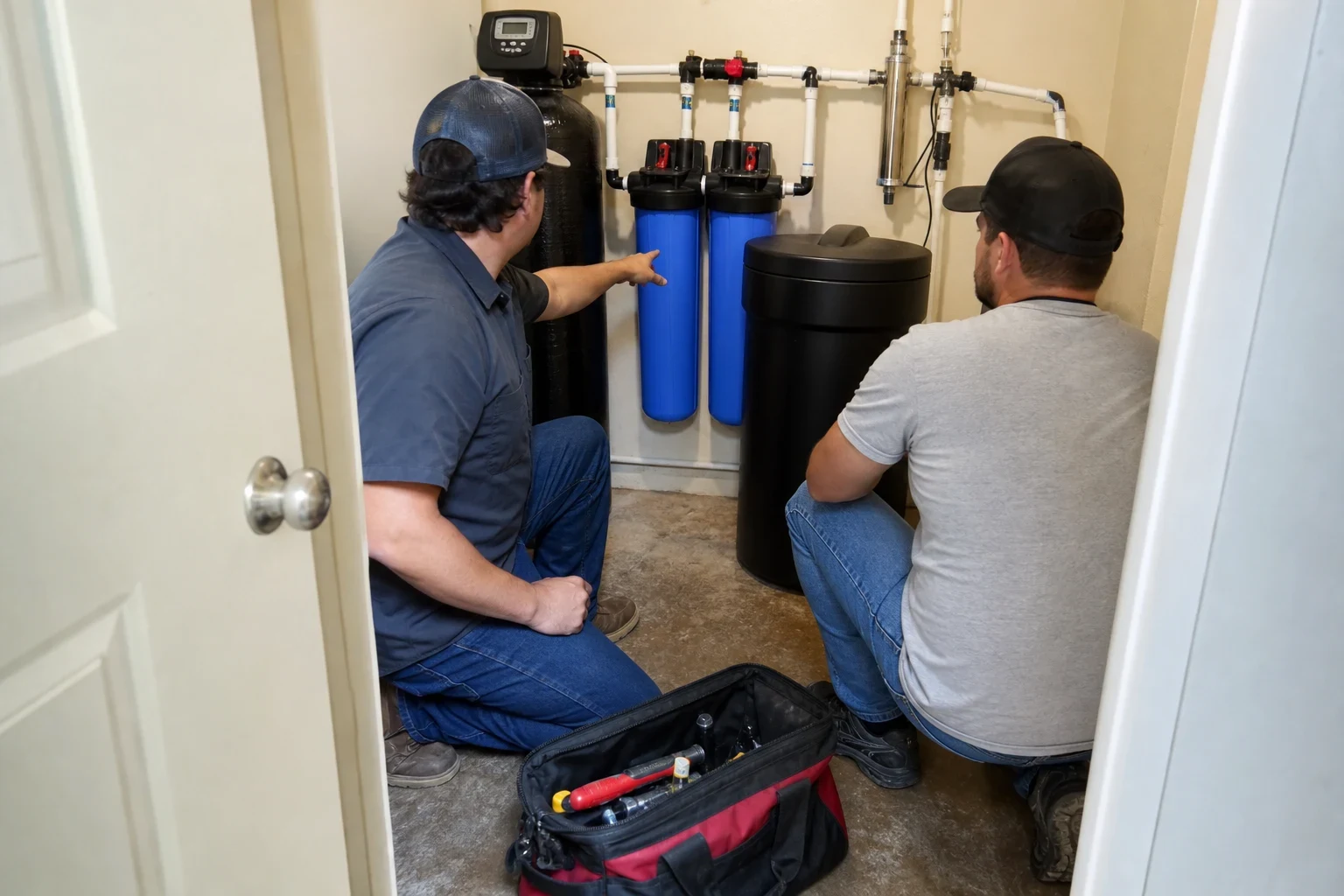
Spin-down screens handle coarse grit, pleated or spun cartridges handle finer sediment, and an oxidizing media tank handles dissolved iron. We size it to your home's flow so showers do not lose pressure.
- 03
Bypass valve and pressure gauges
Every installation gets a bypass, so a cartridge change or repair never leaves your home without water. Gauges on either side of the housing show when the filter is loading up.
- 04
Clean, reachable placement
We mount the housing where you can get to it without moving boxes or crawling. Floors are covered during the work and the area is left as we found it.
- 05
A written upkeep schedule
We note the cartridge size, the change interval we expect for your water and how to read the gauges. Our filter replacement and maintenance visits can take that off your list entirely.
Questions about Iron and sediment filtration?
Call(817) 799-6636Signs particles are getting into your water
Orange or brown staining
Rings in toilets, streaks in showers and dingy whites in the laundry usually mean iron. Bleach tends to set iron stains rather than lift them.
Grit in aerators and showerheads
Unscrew a faucet aerator. Sand or dark flakes on the screen mean sediment is moving through your lines.
A rumbling water heater
Popping or rumbling often means sediment has settled at the bottom of the tank. That layer insulates the burner, wastes energy and shortens the heater's life.
Rusty water after a pause
Water that runs tinted for a moment after a trip away, or after the city flushes mains, points to loose rust somewhere in the system.
Appliance screens that keep clogging
Washers, dishwashers and refrigerator lines all have inlet screens. Repeated clogs are an early warning worth acting on.
How a visit goes
- 1
Test and look
We draw samples, check pressure and look at the pipe materials where water enters your home. If a lab test is warranted, we explain why. Our water testing page covers that in more detail.
- 2
A written recommendation
You get a line-item estimate naming the housing, the media and the valves, with a plain reason for each. If a sediment prefilter alone will do, we say so.
- 3
Installation day
We shut off the main, cut in the filter with its bypass, flush the new lines and check every joint under pressure. Water is off for a short window, and we tell you before it starts.
- 4
Walkthrough and first service date
Before we leave, we show you the bypass, the gauges and how a cartridge comes out. We write down when the first change should happen, based on what your test showed.
What moves the price
Two homes with the same rust stains can need very different equipment, so we price after the test rather than before. Your estimate lists each part and the labor separately. The ongoing cost of cartridges or media is part of the conversation from the start, not a surprise later.
- Iron versus sediment
- A cartridge sediment filter is simpler than an oxidizing iron system, which uses a media tank and may need a drain line for backwashing.
- Your home's flow
- Homes with several bathrooms need larger housings or tanks so pressure holds when two showers run at once.
- Where the line enters
- A main near the garage or water heater is quicker to work on than one tucked in a tight closet.
- Condition of the tie-in
- Corroded galvanized fittings at the connection point sometimes need replacing so the new joint lasts.
- How fast cartridges load
- Water carrying more sediment fills cartridges sooner. We estimate your replacement rhythm so the yearly cost is clear.
Questions about iron and sediment filters
Does city water actually need an iron filter?
Often it does not. Municipal water is treated and usually arrives low in iron. Staining in a city-supplied home more often comes from older pipes inside the house, which is why we test before recommending equipment. Some homes need only a sediment prefilter, and some need nothing at all.
How often do sediment cartridges need changing?
It depends on how much is in your water and how much your household uses. Many homes fall somewhere between a few months and a year. The pressure gauges show when a cartridge is loading up, so you change it when it needs it rather than by guesswork.
Will a filter lower my water pressure?
A correctly sized filter should not noticeably change pressure while the cartridge is clean. Pressure drops gradually as it fills, which is your cue to replace it. We size the housing to your home's flow so a fresh cartridge runs freely.
Can this work alongside whole-house carbon filtration or a softener?
Yes. A sediment stage ahead of whole-house carbon filtration keeps grit from fouling the carbon early. If a hardness test supports a softener, the sediment stage protects its resin too. We plan the order so each piece lasts longer.
Do you work outside Arlington?
We serve Arlington and nearby towns including Mansfield, Grand Prairie, Kennedale and Bedford. Homes on private wells are often where iron filtration matters most, and we test those the same careful way.
Keep grit out of the things you rely on
Tell us what you are seeing, from stains to a rumbling water heater, and we will set up a test and walk through the options. You will never be pushed toward equipment you do not need.